
Mounting kit
[> fig. 01]
A mounting kit refers to a set of eight screws and nuts used to secure the axles to your deck.
There are two head shapes for the screws, each with different lengths. There are countersunk screws [> Fig. 01 A] with a small, conical head and pan-head screws [> Fig. 01 B], which have a larger screw head that curves upward in a lens-shaped manner.
Countersunk screws—as the name suggests—can be fully sunk into the board. This means you won’t even notice the screws when you’re standing directly on your truck. However, you shouldn’t tighten the screws too much, as they can “bite” deep into the board and damage it.
Due to their wider contact surface, this is less likely to happen with pan-head screws. However, they do not disappear completely into the deck, and you will most likely still feel them slightly when standing on your truck.
Both head types are available as hex or Phillips sets, depending on which tool you prefer to use.
When you buy a new mounting set, it sometimes includes additional washers for drop-through trucks. These go on the underside of the deck and prevent the nuts from sinking into the wood.
The key factor in choosing the screw length is that the screw must reach the lock washer on the nut. A rough guideline is:
- 7-ply board without pads: 7/8" length
- 7-ply board with pads (depending on pad height): 1–1 1/4" length
- 9-ply board without pads: 1 1/4" length
- 9-ply board with pads (depending on height):
- 1 1/4–1 1/2" length
- Dropthrough (depending on board thickness):
- 1 1/4–1 1/2" length
Spacer
[> fig. 02]
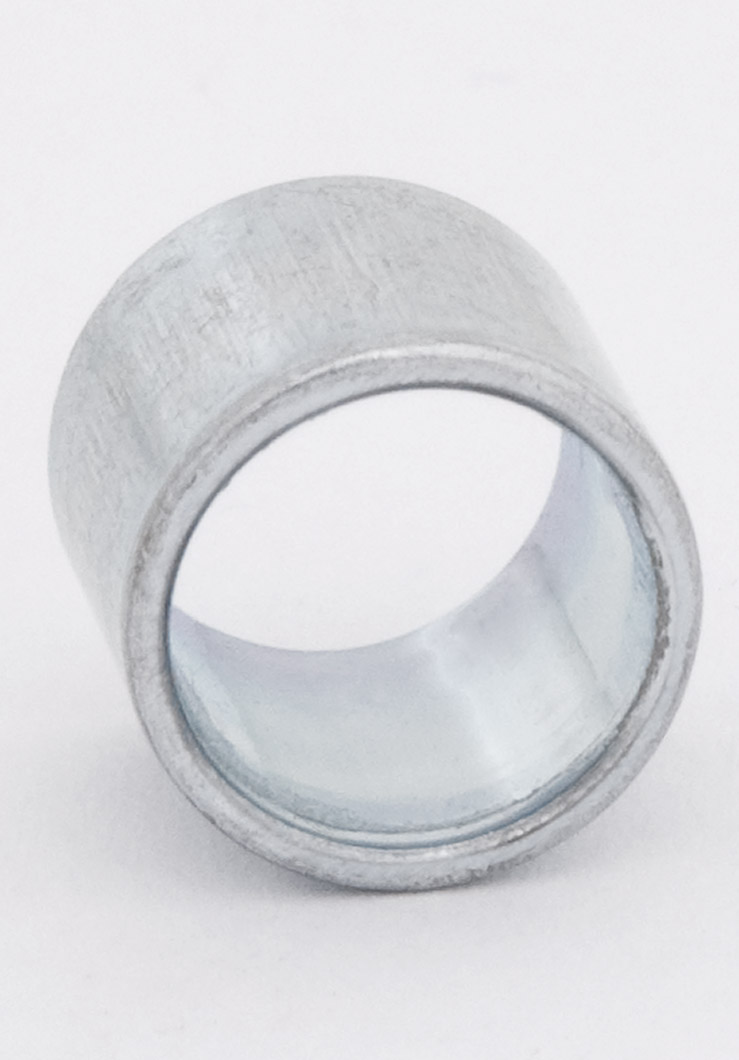
Spacers are small metal sleeves that are installed between the bearings in each wheel. They prevent the bearings from being damaged by excessive compression or stress during slides.
Shockpads/Riserpads
[> fig. 03]
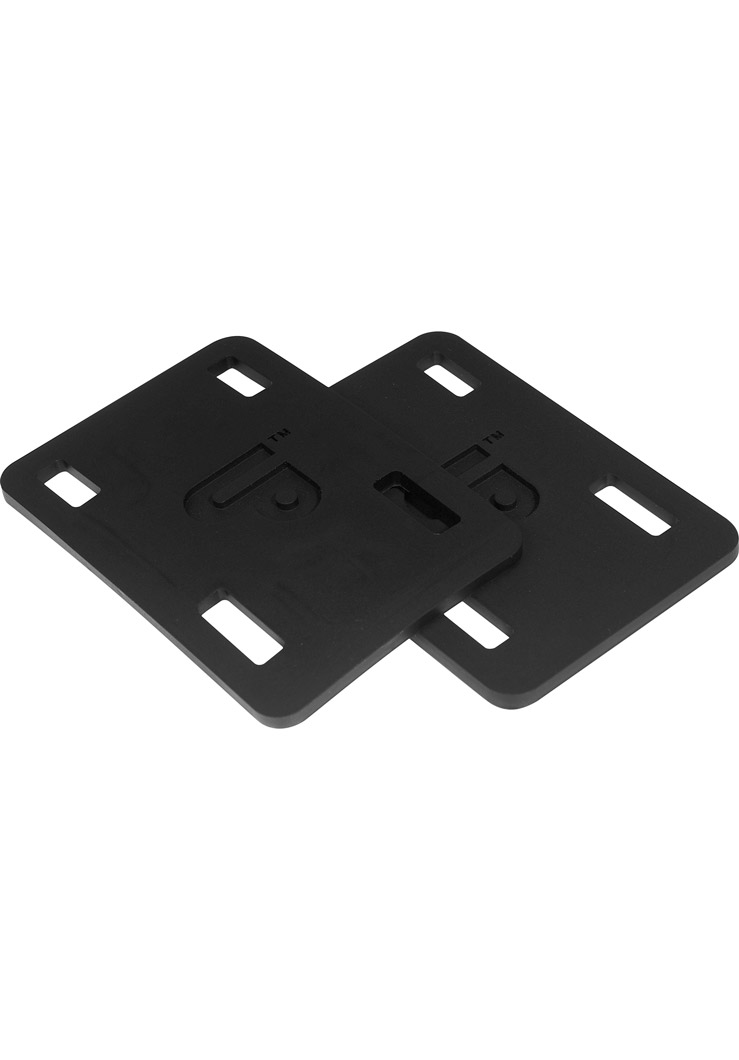
Shock pads/riser pads are made of either rubber or plastic and are available in various heights and hardnesses. They absorb shocks and/or increase the distance between your deck and the wheels. If you have problems with wheelbites, increasing the distance between the wheels and the deck can help.
Wedge pads
[> fig. 04]
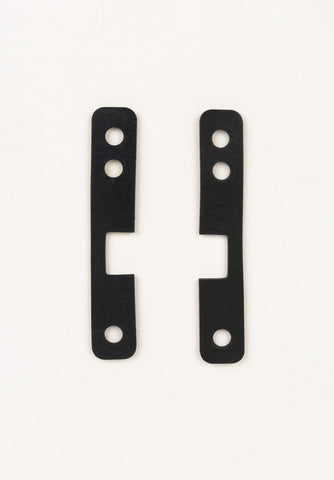
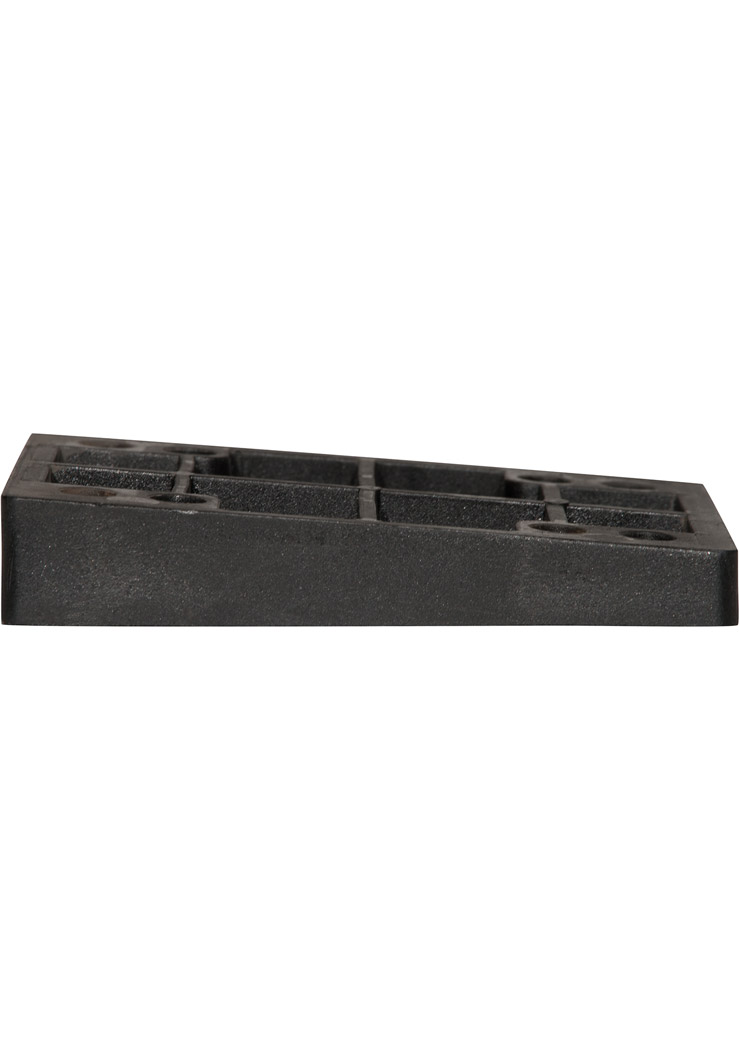
Using wedges (also called wedge pads) can significantly alter the board’s steering characteristics. The trapezoidal wedges are screwed under the trucks, thereby modifying the truck’s angle. If the wedge is positioned with the thinner side facing inward, the deck becomes more stable; if the thinner side faces outward, it becomes more agile.
Skate-Tool
[> fig. 05]
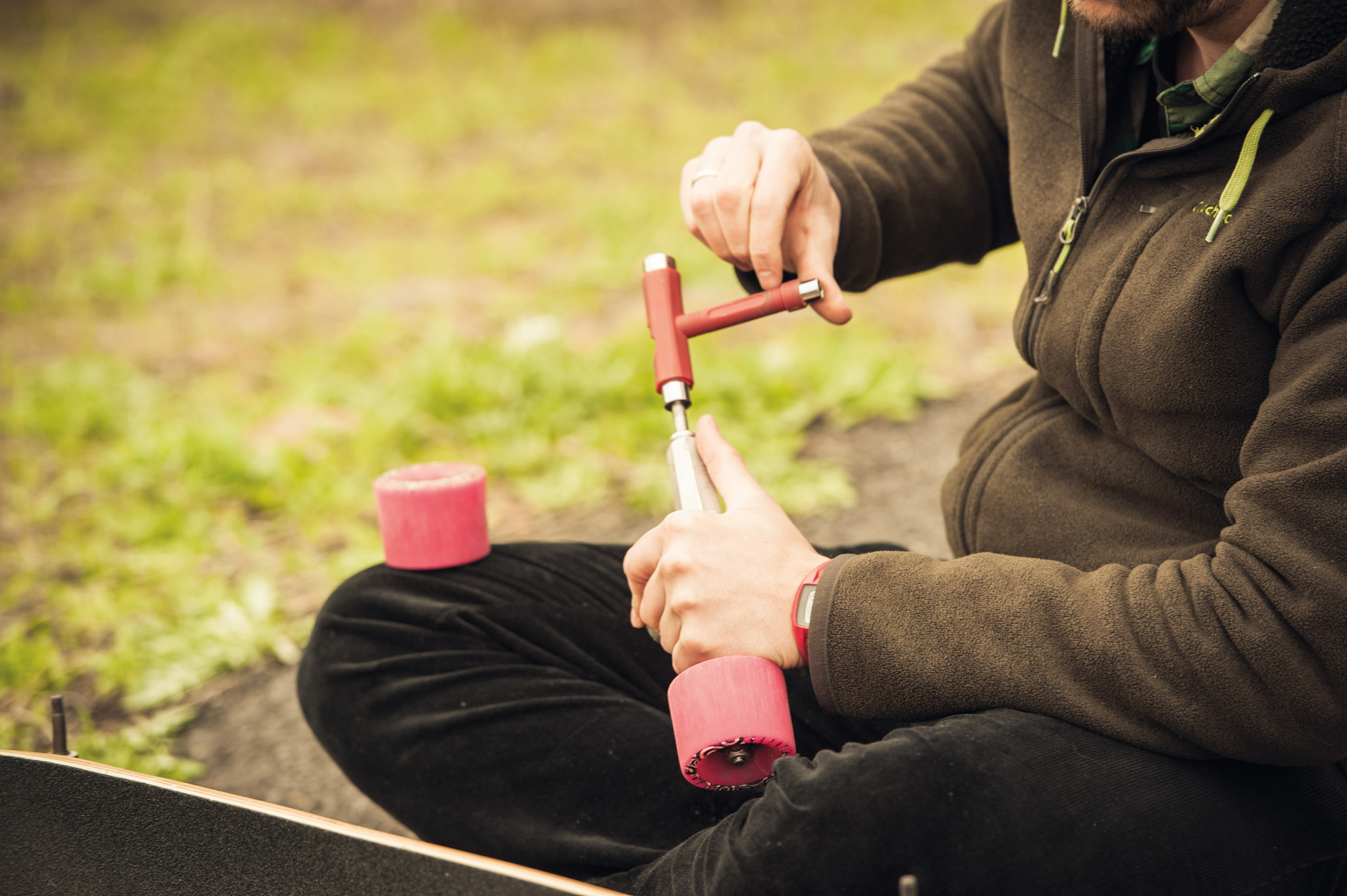
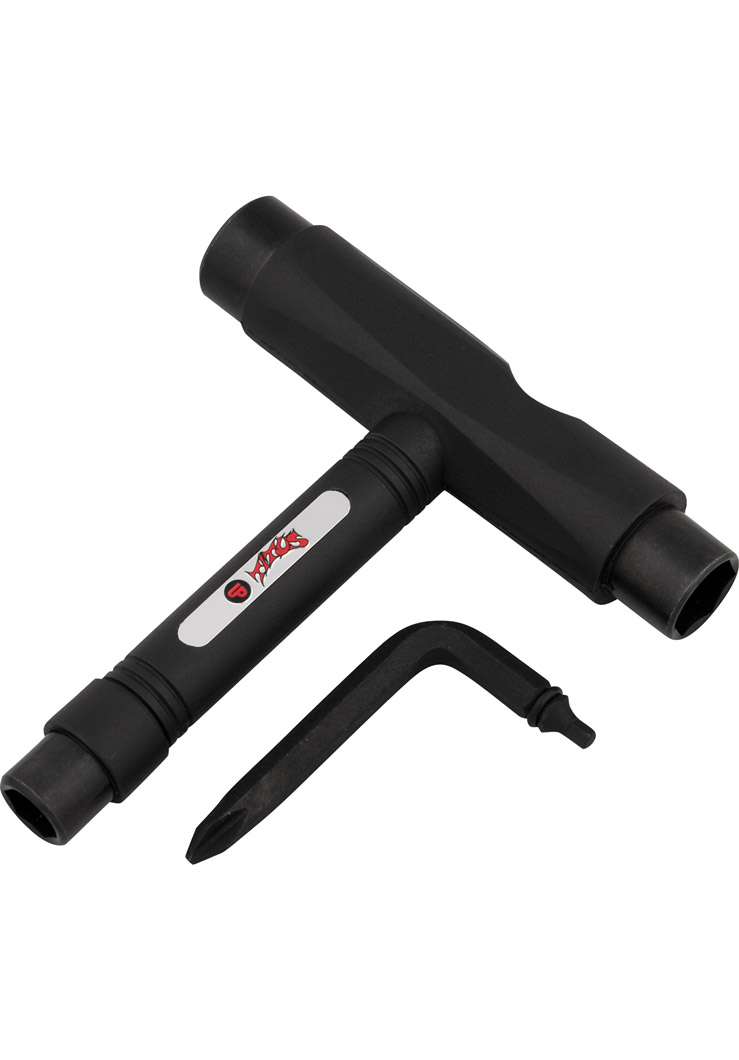
.A skate tool is a T-shaped multi-purpose wrench that’s a must-have in any pocket. This handy little tool features all the inch-sized wrenches you need, for example, to tighten or loosen screws, and usually includes a small Allen wrench and Phillips screwdriver as well.
Bearings
[> fig. 06]
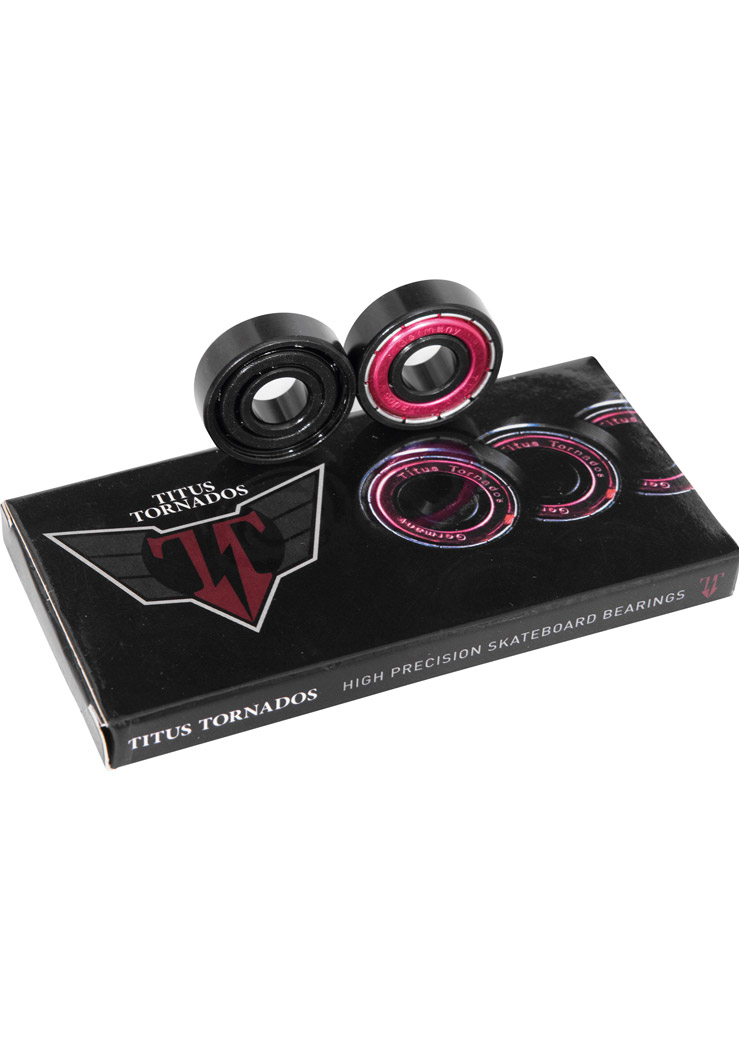
Each wheel is equipped with a total of two ball bearings—one on each side of the wheel. Skateboard ball bearings have the standard size 608 and therefore fit into any regular skateboard or longboard wheel. Double-sealed ball bearings (608 ZZ) are dustproof and maintenance-free. Bearings with removable covers, known as shields, are easier to maintain, but dirt can penetrate them more easily.